Video Marketing Platforms: A Complete Guide for Digital Marketers
 Video has become one of the most powerful tools in digital marketing. Businesses use videos to build brand awareness, explain products, connect with customers, and increase conversions. However, creating a video is only one part of the process. Choosing the right video marketing platforms is equally important for reaching the right audience.
What Are Video Marketing Platforms?Video marketing platforms are digital platforms and tools that help businesses and creators create, publish, distribute, promote, and measure video content. They play an important role in modern digital marketing because videos allow brands to communicate their products, services, and ideas in an engaging and easy-to-understand format.
Instead of simply uploading a video, marketers can use these platforms to reach specific audiences, build brand awareness, generate leads, drive website traffic, and increase conversions.
How Do Video Marketing Platforms Work?
A typical video marketing process involves several stages:
- Create the video – Businesses produce content such as tutorials, product demonstrations, advertisements, educational videos, or customer testimonials.
- Publish the video – The content is uploaded to a suitable platform such as YouTube, Instagram, TikTok, Facebook, or LinkedIn.
- Reach the audience – Platforms use algorithms, search, recommendations, hashtags, and advertising tools to help content reach potential viewers.
- Engage viewers – Likes, comments, shares, subscriptions, and other interactions help businesses build relationships with their audience.
- Measure performance – Analytics provide information about views, watch time, audience retention, engagement, and conversions.
- Optimize future content – Marketers use the collected data to improve their videos and marketing strategy.
Types of Video Marketing Platforms
There are different types of platforms depending on the marketing objective.
Video-Sharing Platforms:
YouTube is a major example. These platforms are useful for long-form videos, tutorials, educational content, reviews, and entertainment.
Social Media Platforms:
Instagram, TikTok, Facebook, and LinkedIn allow businesses to use short-form videos, Stories, Reels, live videos, and other formats to connect with their audiences.
Professional Video Hosting Platforms:
Platforms such as Vimeo provide businesses with tools for hosting, managing, and presenting professional video content.
Video Advertising Platforms:
Advertising networks allow businesses to promote videos to specific audiences based on factors such as interests, demographics, online behavior, and search activity.
Why Are Video Marketing Platforms Important?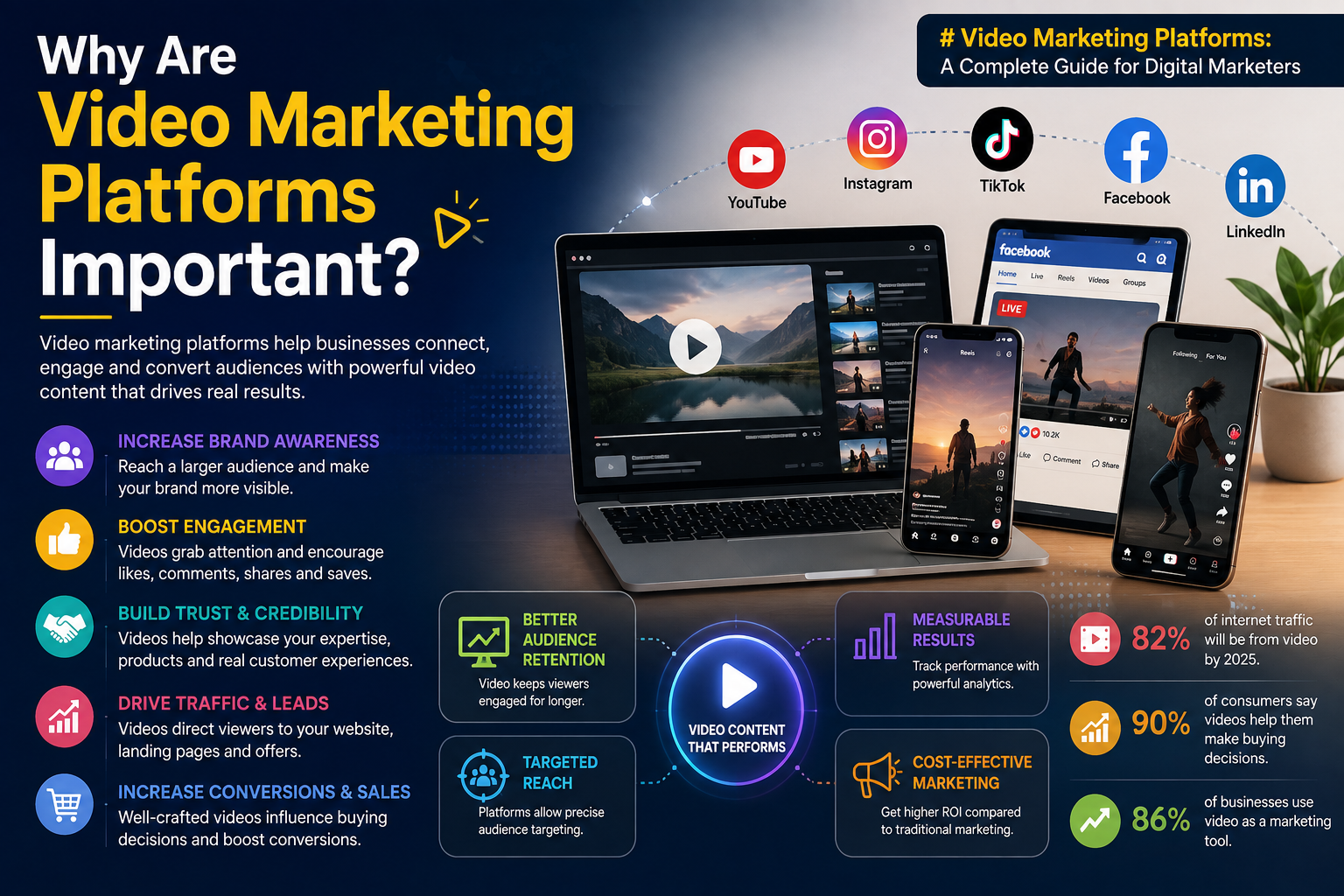 Video marketing platforms give businesses access to large audiences without requiring traditional advertising methods. They can help brands:
- Increase brand awareness
- Reach new customers
- Build audience engagement
- Explain products and services
- Generate leads
- Drive website traffic
- Increase conversions
- Build trust and credibility
- Measure marketing performance
Choosing the Right Video Marketing Platform
The best platform depends on your target audience, content type, industry, and marketing goals. For example, YouTube can be useful for detailed educational videos, Instagram and TikTok are popular for short-form content, while LinkedIn can be effective for professional and B2B marketing.
Therefore, businesses should focus on the platforms where their target audience is most active rather than trying to be present everywhere.
Conclusion
Video marketing platforms have become an essential part of digital marketing. They provide businesses with the tools needed to create, distribute, promote, and analyze video content. By choosing the right platform and combining quality content with a clear strategy, businesses can connect with their audience and achieve their marketing goals more effectively.
Why Are Video Marketing Platforms Important?
Video marketing platforms are important because they give businesses a powerful way to reach, engage, and communicate with their target audience. With the growing popularity of video content, businesses can use these platforms to showcase products, educate customers, build brand awareness, and support sales.
Here are the major reasons why video marketing platforms are important:
1. Increase Brand Awareness
Video makes it easier for businesses to introduce their brand to new audiences. Engaging videos can help people recognize and remember a brand.
Businesses can use videos to communicate their:
- Brand story
- Products and services
- Values
- Unique selling points
- Company culture
2. Reach a Larger Audience
Popular video platforms have large and diverse audiences. Businesses can use organic content, search optimization, recommendations, and paid advertising to reach potential customers.
For example, a well-optimized YouTube video can continue attracting viewers through search and recommendations long after it is published.
3. Improve Audience Engagement
Video is highly engaging because it combines visuals, audio, text, and storytelling. This allows businesses to communicate complex ideas in a simple and memorable way.
Viewers can also interact with videos through:
- Likes
- Comments
- Shares
- Saves
- Subscriptions
- Clicks
4. Build Trust and Credibility
Customers often want to understand a product or business before making a decision. Videos can help businesses demonstrate their products and communicate with customers more personally.
Useful formats include:
- Customer testimonials
- Product demonstrations
- Tutorials
- Expert interviews
- Behind-the-scenes videos
- Educational content
5. Drive Website Traffic
Videos can encourage viewers to visit a company’s website, landing page, online store, or social media profile.
A strong call-to-action (CTA) can guide viewers toward the next step, such as learning more about a product, signing up for a service, or contacting the business.
6. Support Lead Generation
Video marketing can be used to attract potential customers and move them through the marketing funnel.
For example:
Video → Landing Page → Lead Form → Follow-up → Customer
Educational videos, webinars, product demonstrations, and targeted advertisements can all contribute to lead generation.
7. Increase Conversions
Videos can help customers understand products and services before purchasing. Product demonstrations, reviews, tutorials, and testimonials can provide useful information that supports purchasing decisions.
When customers understand the value of a product more clearly, they may be more confident about taking the next step.
8. Improve Content Distribution
Video marketing platforms allow businesses to distribute the same core idea in different formats.
For example, one long YouTube video can be transformed into:
- Instagram Reels
- YouTube Shorts
- TikTok videos
- LinkedIn clips
- Social media posts
This makes video content more versatile and helps businesses reach audiences across multiple channels.
9. Provide Valuable Analytics
One of the biggest advantages of digital video platforms is the ability to measure performance.
Businesses can analyze:
- Views
- Watch time
- Audience retention
- Engagement rate
- Click-through rate
- Traffic
- Conversions
- Audience demographics
These insights help marketers understand what works and improve future campaigns.
10. Support SEO and Online Visibility
Video can also contribute to a brand’s online visibility. Platforms such as YouTube function as search engines, allowing users to discover videos based on keywords and search queries.
Using relevant titles, descriptions, keywords, thumbnails, and useful content can improve the discoverability of videos.
11. Help Businesses Stay Competitive
As more brands use video in their marketing strategies, having a strong video presence can help businesses remain competitive.
Businesses that consistently provide useful and engaging video content can create stronger relationships with their audience and differentiate themselves from competitors.
Conclusion
Video marketing platforms are important because they combine content creation, audience reach, engagement, advertising, analytics, and conversion opportunities in one digital environment.
By choosing the right platform and creating valuable content consistently, businesses can increase brand awareness, build customer trust, generate leads, drive traffic, and support long-term growth.
Popular Video Marketing Platforms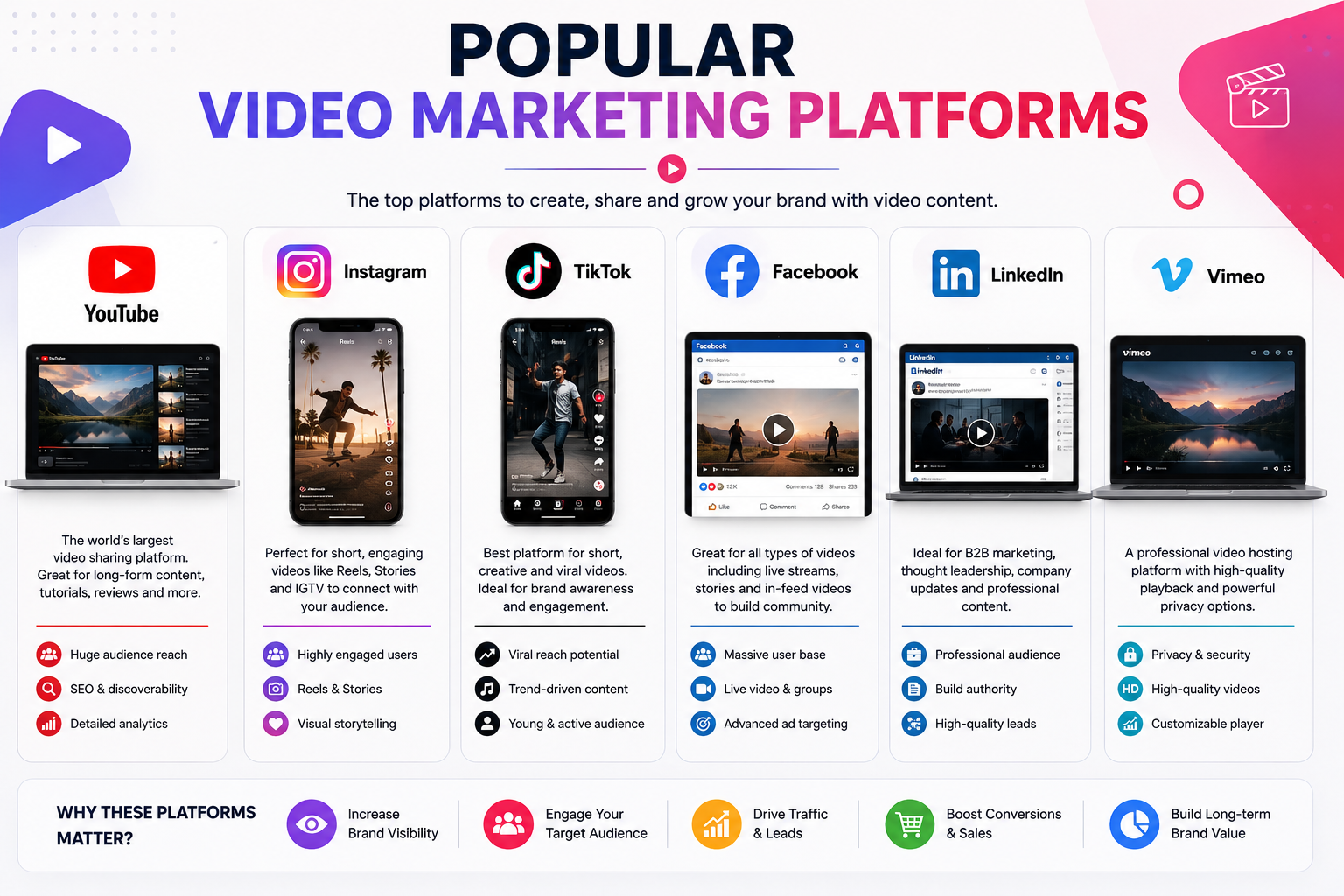 1. YouTube
YouTube is one of the most popular platforms for video marketing. Businesses can create branded channels, publish educational content, product demonstrations, tutorials, reviews, and promotional videos.
YouTube also provides analytics that help marketers understand views, watch time, audience retention, and engagement.
2. Instagram
Instagram is highly effective for short-form video content. Reels, Stories, and video posts allow brands to showcase products and communicate with audiences in a visually engaging way.
Instagram is especially useful for lifestyle brands, creators, fashion businesses, restaurants, and other visually focused industries.
3. TikTok
TikTok focuses heavily on short-form and entertaining video content. Its recommendation system can help engaging content reach new audiences beyond existing followers.
Businesses can use TikTok for product demonstrations, educational content, trends, behind-the-scenes videos, and influencer collaborations.
4. Facebook
Facebook supports several video formats, including short videos, longer videos, Stories, and live streams. It can be useful for businesses targeting specific audience groups through organic content and paid advertising.
5. LinkedIn
LinkedIn is particularly valuable for B2B video marketing. Businesses can share educational videos, industry insights, company updates, employee stories, and professional content.
Video can help companies establish authority and build trust with potential clients and business partners.
6. Vimeo
Vimeo is a professional video hosting platform that provides tools for businesses and creators to host and manage high-quality videos.
It can be useful for companies that want greater control over how their videos are presented on websites and other digital channels.
How to Choose the Right Video Marketing Platform
The best platform depends on your business goals and target audience. Before choosing a platform, consider:
Target Audience: Identify where your potential customers spend their time online.
Content Format: Decide whether your strategy focuses on short-form videos, tutorials, live streams, product videos, or long-form content.
Marketing Goals: Your goal might be brand awareness, engagement, lead generation, website traffic, or sales.
Budget: Consider both organic marketing opportunities and paid advertising costs.
Analytics: Choose platforms that provide useful performance data so you can improve future campaigns.
Tips for Successful Video Marketing Successful video marketing is not just about creating attractive videos. It is about delivering the right message to the right audience on the right platform. Here are some important tips to improve your video marketing strategy:
1. Know Your Target Audience
Before creating a video, understand who you are trying to reach. Consider their interests, problems, age group, online behavior, and preferences. This helps you create content that feels relevant and useful.
2. Start With a Strong Hook
The first few seconds are extremely important. Start with something that immediately grabs attention, such as a question, interesting fact, problem, or strong statement.
Example:
Instead of starting with “Welcome to our channel…”, try “Are you struggling to get customers from Instagram?”
3. Keep Your Message Clear
Avoid putting too much information into one video. Focus on one main topic or idea and explain it in a simple way. A clear message makes your content easier to understand and remember.
4. Create Valuable Content
Your videos should provide something useful to viewers. Depending on your business, you can create:
- Tutorials
- How-to videos
- Product demonstrations
- Educational videos
- Customer testimonials
- Behind-the-scenes content
- Tips and tricks
- Industry insights
5. Optimize Videos for Each Platform
Different video marketing platforms have different audiences and formats. A vertical short-form video may work well on Instagram Reels or TikTok, while longer educational content can be suitable for YouTube.
Adapt the video’s:
- Length
- Aspect ratio
- Caption style
- Thumbnail
- Title
- Call-to-action
6. Use Strong Titles and Thumbnails
For platforms such as YouTube, titles and thumbnails can strongly influence whether people click on your video. Make them clear, relevant, and interesting without misleading the viewer.
7. Add Captions and Subtitles
Many people watch videos without sound. Captions make your content easier to follow and can also improve accessibility.
8. Include a Clear Call-to-Action
Tell viewers what you want them to do after watching the video.
Examples:
- Visit our website
- Follow our page
- Subscribe to the channel
- Download the guide
- Learn more
- Contact us
9. Be Consistent
Consistency helps build familiarity with your audience. Create a realistic content schedule and stick to it rather than trying to publish too much at once.
10. Analyze Your Performance
Use platform analytics to understand how your videos perform. Important metrics include:
- Views
- Watch time
- Audience retention
- Engagement rate
- Click-through rate
- Shares
- Comments
- Conversions
Use these insights to understand what your audience likes and improve future videos.
11. Tell a Story
People often connect better with stories than with direct advertisements. Use storytelling to show a problem, introduce a solution, and demonstrate the result.
12. Test and Improve
Try different hooks, video lengths, topics, thumbnails, and formats. Compare the results and focus more on the approaches that perform well.
In short: effective video marketing combines valuable content, strong storytelling, platform optimization, consistency, and data-driven improvement.
Conclusion
Video marketing platforms give businesses powerful ways to connect with audiences, promote products, and build stronger brands. YouTube, Instagram, TikTok, Facebook, LinkedIn, and Vimeo each offer different opportunities.
The key is not to use every platform at once. Instead, understand your audience, choose platforms that match your goals, and consistently create valuable video content. With the right strategy, video marketing can become an important part of a successful digital marketing campaign.
Author Sabith https://sabithsibi.com/